Key Takeaways: The Stories That Merit a Slower Read
Main Point: Read these stories slowly for formal control, ethical pressure, speculative premise, emotional afterlife, and classroom or discussion value. The point is not to predict awards. The point is to decide what deserves a second pass, a seminar table, a reading-group argument, or a careful recommendation to the right reader.
This guide treats recent SFF short fiction as something to reread, not something to sort into a trophy case. A story can be famous and still thin on return. Another can look modest on first encounter, then sharpen when the reader notices how its title, opening movement, and final image have been working together all along.
The four anchor readings here sit in six recurring lanes: algorithmic comfort and surveillance, moral thought experiments, institutional horror, reproductive autonomy, queer embodiment, and ecological or social collapse. Those labels are not cages. They are handles.

How to use this guide
- Reread when the premise feels simple but the emotional charge keeps changing.
- Teach when the structure gives readers something concrete to mark: repetition, framing, diction, or a final turn back toward the opening.
- Discuss when the story refuses an easy moral exit.
- Recommend when you can name the reader who needs it, and the reader who may need warning before it.
I keep a short list for this purpose beside longer award and magazine lists. It is less glamorous. It is more useful.
What “Recent” and “Worth Reading Closely” Mean Here
“Recent” follows short-fiction circulation rather than a strict calendar boundary. The primary window is roughly the last two to three publication cycles in short SFF, because that is how these stories tend to move: magazine appearance, reader discussion, anthology attention, award chatter, syllabus adoption, and delayed discovery.
One near-recent benchmark can enter when it clarifies a current pressure. Samantha Mills’s “Rabbit Test” belongs in that role here. It falls outside the primary recent window, but it remains useful for thinking about reproductive autonomy, political control of the body, and the way a speculative device can make policy feel intimate rather than abstract.
The working criteria
“Worth reading closely” does not mean most awarded, most viral, or most visible on a recommendation thread. It means the story changes under rereading.
- Precision of premise: the impossible element has a clean pressure point.
- Sentence-level pressure: the prose carries more than delivery of events.
- Structural risk: the form does some of the thinking.
- Emotional coherence: the ending feels earned even when it unsettles.
- Speculative necessity: the story needs its speculative move, rather than wearing it as decoration.
- Contribution to current SFF conversation: the work speaks to live genre concerns without becoming a pamphlet.
For readers arriving through Merc Rustad: author pages, The Collars We Wear, or a venue-aware interest in stories like those found at Fireside: publication venue, this distinction matters. Short fiction criticism should welcome readers in without sanding off the strange, political, or formally ambitious parts of the work.
Four Recent SFF Stories to Put Under the Lens
The central list stays deliberately small. Four stories allow for attention. A long survey would produce the familiar blur: title, theme, praise, next title. These entries use the same practical rhythm: premise, formal action, reread value, best-fit readers, and a brief caution where needed.
Naomi Kritzer, “Better Living Through Algorithms”
The obvious hook is algorithmic life. The better reading starts with comfort.
“Better Living Through Algorithms” works as the algorithmic-intimacy entry because it does not need a melodramatic machine villain. Its interest lies in care, habit, compliance, reward loops, and the seduction of being gently managed. The story understands that optimization rarely arrives wearing a black cape. It arrives as help.
On reread, watch the gamified selfhood. Notice how the premise turns ordinary decisions into measurable behavior, then into a kind of emotional weather. The horror is quiet because the bargain is plausible: fewer frictions, better nudges, a life with less drag.
Best-fit readers: readers interested in surveillance, platform logic, self-improvement culture, and stories where unease accumulates by inches.
Caution: Treating this story as merely an AI-warning tale misses its sharper question: why does being managed sometimes feel like being cared for?
Isabel J. Kim, “Why Don’t We Just Kill the Kid In the Omelas Hole”
This is the moral-logic entry, and its title tells the reader where the argument begins. It inherits a famous thought experiment, then refuses to let inheritance remain tidy.
The story’s real machinery is repetition. The question returns, escalates, mutates, and exposes the social appetite for a decisive answer. That repetition is not padding. It is structure as argument. Each pass through the problem makes communal complicity harder to outsource.
For discussion, this story is especially strong because readers often arrive ready to solve it. The story makes that impulse part of the trap. Who wants the clean solution? Who benefits from naming one body as the site where everyone else’s ethics can be tested?
Best-fit readers: readers drawn to inherited texts, moral exhaustion, communal reasoning, and stories that argue through form.
Rachael K. Jones, “The Sound of Children Screaming”
This story needs careful handling. It belongs in the institutional-horror lane, and any discussion should name school violence without reproducing sensational detail.
The formal force comes from collision: portal-fantasy diction meets real-world terror and institutional failure. That collision matters. If the story is discussed only as topical horror, its craft gets flattened. The fantasy vocabulary does not soften the violence; it changes under pressure, showing how inherited story forms can buckle when they meet systems that fail children.
On reread, follow the language of authority, protection, procedure, and escape. The story asks what kinds of doors fiction has trained us to expect, and what happens when the wrong door opens.
Best-fit readers: readers prepared for difficult material, teachers working with content warnings, and critics interested in how genre diction can expose institutional abandonment.
Caution: Use conservative warnings for school violence, grief, and institutional failure before assigning or recommending this story.
Samantha Mills, “Rabbit Test”
“Rabbit Test” functions here as the near-recent benchmark, not as part of the primary window. Its usefulness lies in comparison. It gives the reproductive-autonomy lane a clear reference point for how bodily policy can become speculative structure.
The premise presses public control into private life. That is the story’s ethical charge. Rather than treating reproductive violence as background worldbuilding, it makes the body the contested site where law, fear, memory, and survival meet.
For readers, the reread value sits in how the story binds historical echo to speculative pressure. It is not only asking what could happen. It asks what has already been made thinkable.
Best-fit readers: readers examining bodily autonomy, political coercion, reproductive violence, and the emotional costs of state power.
How to Read These Stories Beyond Plot Summary
Plot summary is useful once. Close reading earns its keep on the second pass.
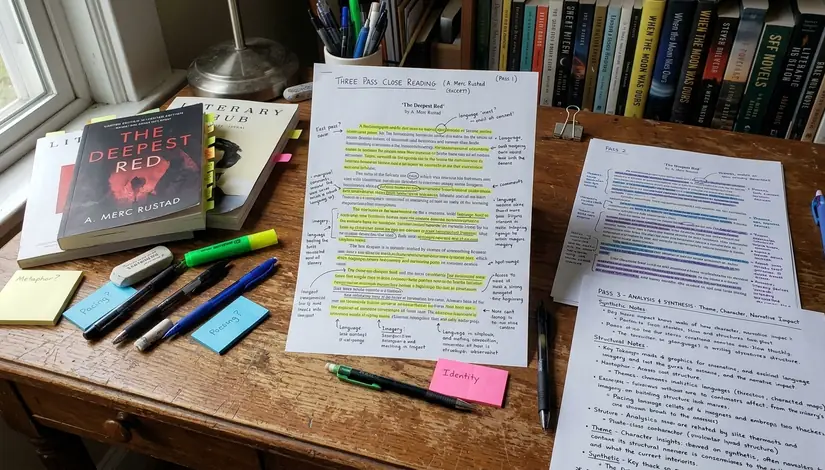
A three-pass method for short SFF
- First pass: read for premise and emotional movement. Ask what impossible thing the story asks you to accept, and how your feelings change from opening to ending.
- Second pass: track structural cues and repeated language. Mark titles, first paragraphs, repeated objects, pronoun shifts, bureaucratic vocabulary, institutional phrasing, and moments where the premise stops being clever and becomes unavoidable.
- Third pass: place the final paragraph beside the first paragraph. Good short SFF often revises its opening after the fact.
Beginners often look for worldbuilding in exposition. Short fiction frequently does the opposite. It carries the world through implication, diction, omission, recurring images, and a single unexplained social rule that everyone in the story already accepts.
That compression is not a shortcut. It is one of the form’s central tools. A novel may build a city block by block; a short story can give you a form letter, a classroom phrase, a product name, or a pronoun shift and let the whole structure appear in silhouette.
Expert Tip: When a story feels opaque, do not ask first, “What does this symbolize?” Ask, “What does the impossible element make visible that realism might let me ignore?”
What These Stories Reveal About Current SFF
Start from the stories, not from a grand claim about the field. Read together, these four suggest that recent short SFF is especially strong when it treats systems as emotional environments.
Platforms do not stay outside the self in “Better Living Through Algorithms.” Moral inheritance does not remain safely philosophical in Isabel J. Kim’s story. Schools, states, families, economies, and medical regimes are not backdrops. They become weather. They shape what characters can feel, choose, refuse, or even imagine.
Current pressures, not a total map
The recurring concerns are clear enough: algorithmic life, moral exhaustion, bodily autonomy, climate anxiety, queer survival, and the limits of consolation. Still, this is not a claim about all contemporary SFF. It is a reading map for a visible strand of recent English-language short fiction moving through major online venues and anthologies.
The distinction matters because complexity is not the same as obscurity. A structurally ambitious story should still give the reader something: a pressure, a rhythm, an image, a wound, a question that will not settle. These stories do. Their difficulty has grain.
That is why reread value beats market buzz as a critical measure. A twist can impress once. A strong short story deepens, complicates, or discomforts the first-pass interpretation. It leaves the reader carrying not only what happened, but how the story trained them to notice it.
Scope, Caveats, and Reading Ethically
This review is not exhaustive. It is not a ballot guide, not a claim about all contemporary SFF, and not a substitute for reading the full stories in their original contexts.
The practical editorial standard is simple: publication dates, venue categories, title styling, author names, and availability should be checked during drafting and again during the final editorial pass. Availability can change. A story that is free to read now may later move behind a paywall, into a subscriber archive, or into a print or ebook anthology context.
Content and context
Reading ethically also means warning plainly without turning harm into spectacle. For the stories discussed here, conservative content notes may include school violence, reproductive violence, institutional abuse, grief, and body horror. The warning should help a reader decide how to approach the work, not pre-explain the work into numbness.
The guide is strongest as a rereading map for recent English-language short SFF accessible through major online venues and anthologies, not as an exhaustive survey of all contemporary speculative short fiction. That limitation is not a weakness if it stays visible. It keeps the claims honest.
Return to the stories themselves. Read the first paragraph after the last. Ask what the premise made you accept too quickly. Then ask what changed when the story asked you to look again.