Give the Feeling a Form the Character Can Touch
A writer seals an apology inside an envelope. Before the character can put it away, something presses against the paper from within: a glass moth, its wings making a faint, brittle sound. The character can feel it through the envelope. They can also hear it when the room goes quiet.
The image has a scene to live in. The character wants to hide the letter; the moth makes hiding it difficult. To build a speculative metaphor this way, identify the conflict the character avoids, give its physical form a rule, and let that rule change what the character can do next.
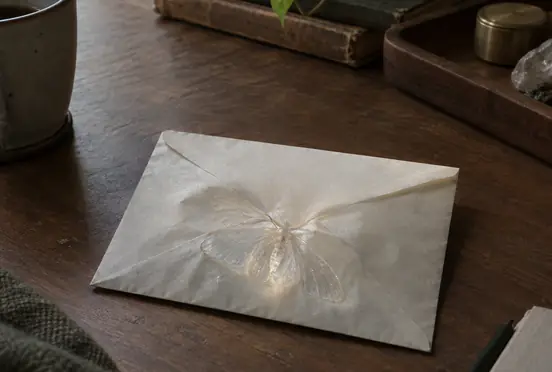
A moth might suggest fragility, secrecy, or transformation. Those associations can enrich the prose, but they cannot carry the scene alone. The useful question is what happens when the character tries to slip the envelope beneath a stack of books and hears the tapping continue. Do they open it? Move it farther away? Risk carrying it into a room where the person named on the letter might hear?
Choice Before Symbol: Give the metaphor a consequence. It earns its place when the character must choose what to preserve, reveal, or destroy.
This approach leaves room for wonder. The glass can catch light; the wings can sound like paper being folded. Sensory detail matters more when it belongs to an object the character must handle.
Start with the Feeling the Character Resists
What does the protagonist do when the person they have hurt walks into the room? That question often gives a writer more to work with than a list of emotions. The protagonist might fold a letter out of sight, take another route, or start an ordinary conversation before the other person can ask a difficult question. Each action gives the later speculative element something concrete to interrupt.
Before choosing a magical form, write three private sentences on a piece of scratch paper:
- What happened?
- What does the protagonist believe it means about them?
- What do they do to avoid facing it?
For the glass-moth story, the protagonist failed to warn their sibling of an approaching flood. They believe their silence makes them unworthy of trust. They draft an apology, seal it, and keep it undelivered rather than risk hearing what the sibling has to say.
Fear may be the immediate feeling when the sibling enters. Under it sits a more exact conflict: the protagonist fears being believed and then held accountable. A letter that merely says “I’m sorry” cannot settle what the sibling needs to know about the missed warning. That gap gives the moth room to act without letting it speak the whole truth on the protagonist’s behalf.
The three sentences are a planning method for this story, not a theory of how guilt always works. Their value lies in the visible avoidance they uncover. If the letter stays sealed, the speculative rule can attach to that choice rather than to guilt in the abstract.
Choose a Vessel: Magic, Technology, or Monster
The same unsent apology could take several speculative forms. Each form changes the scene’s available actions, so choose by what you need the character to face.
- Magic: A sealed apology hatches a glass moth. The character can feel it through the paper, carry the envelope away, or open it and let the moth out. A repeatable act, sealing an unsent letter, produces a consequence the character can anticipate.
- Alien technology: A transmission repeats near its intended recipient. An interface gives the character a way to detect, interrupt, or perhaps refuse the message, while the interface’s limits determine who can hear it.
- A monster: A creature follows the person owed an answer. Its movement can force an encounter the protagonist would otherwise avoid, placing the question of who knows what into a shared physical space.
For the flood story, the moth belongs close to the hidden letter. It can press against the envelope while the protagonist still has a chance to deliver it. Later, it can approach the sibling. That movement turns an attempt to contain words into a problem of distance and proximity.
Ask what a character can see, hear, carry, damage, trap, or refuse. The answers should suggest verbs for the scene. “Shimmering wings” establishes an impression; “wings tapping against the sealed flap” gives the protagonist a reason to stop with their hand on the door.
The choice also affects viewpoint. If the protagonist feels the tapping before anyone else hears it, they have a brief chance to conceal it. Once the sibling hears words from the moth, concealment changes shape: the protagonist can still withhold the full account, but can no longer pretend there is no letter.
Write the Rules That Make the Metaphor Matter
Set the moth’s rules before drafting the confrontation. Otherwise it may acquire a convenient new ability just when the scene needs one. A compact rule sheet should cover its trigger, visible effect, range, limits, and cost.
- Trigger: An unsent apology sealed in an envelope hatches a glass moth.
- Visible effect: The moth presses and taps against the paper; once released, it can be seen and heard.
- Range: Near the intended recipient, it repeats the letter’s opening words.
- Limit: It cannot explain anything the writer left out, or speak beyond those opening words.
- Cost: Crushing the moth also destroys the letter.
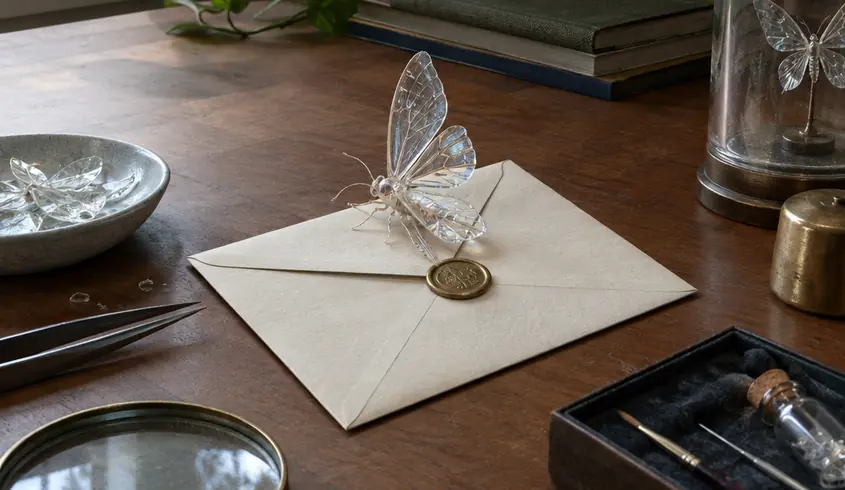
Now test the rules against plot. The protagonist can exploit the range by keeping the envelope away from their sibling. Someone else can encounter the moth, though its repeated words will mean most to the person named in the apology. The cost makes crushing it a choice about the letter as well as the creature.
Remove the Moth: Imagine the scene without it. If the protagonist makes the same decision in the same way, revise a rule until the moth changes their available choices.
The mechanism should remain legible without turning every emotion in the story into an insect. Here, the trigger belongs to a particular act of withholding: sealing an apology the protagonist does not send. Its voice belongs to words already written. Its destruction takes the letter with it. A reader can follow those connections while still feeling the strangeness of glass wings moving inside paper.
Let the Metaphor Change Across Three Encounters
Escalation comes from changing who knows about the moth, rather than making more moths. Keep the rule steady and let the circumstances put new pressure on it.
The tapping only the protagonist hears
Alone, the protagonist feels movement inside the sealed envelope. They press it flat or place it out of sight. The attempt tells us two things at once about their state of mind: they recognize that something is wrong, and they would still rather manage the letter than deliver it. The moth has interrupted an action, but the protagonist can continue to hide what happened.
The words the sibling hears
When the sibling comes near, the moth repeats the apology’s opening words. The sibling now has a reason to ask what the protagonist has withheld. This encounter gives the speculative event another witness without giving that witness the full account. Hearing “I should have warned you” raises a question the moth cannot answer: warned them about what, and when?
The letter they can hand over or destroy
The protagonist opens the envelope. With the moth on the page, crushing it would destroy the letter; preserving it leaves the written account available to the sibling. The decision belongs to the protagonist, but its consequences reach beyond them.
Let hands and voices carry the emotional turn. Opening the envelope, holding still while the moth lands, and offering the letter can show a change in behavior more clearly than a paragraph announcing that the protagonist has accepted responsibility. The sibling may want an account of the missed warning rather than an apology. They retain control over their response.
Revise the Metaphor Without Turning Pain into a Cure
Revision begins with the character’s attempts: hiding the envelope, listening for the moth, moving it away from the sibling, then deciding what to disclose after the first words escape. Follow those actions through the draft. They can reveal the rule in motion, allowing you to cut an explanation the scene has already supplied.
Check each appearance against the established trigger, proximity effect, and cost. If the moth repeats words when the sibling is absent, the scene needs an on-page cause or a change to the rule. If the protagonist crushes it and later reads the intact letter, the cost has lost its force. Such checks protect the reader’s sense that the character is acting within a world that holds together.
The Sibling’s Say: Let the moth expose words the protagonist wrote. Do not let it supply the unwritten explanation or decide what the sibling must feel on hearing it.
Keep confession separate from repair. Handing over the letter does not undo the missed warning, and the sibling need not forgive the protagonist for delivering it. The moth can force an encounter with words; it cannot make those words sufficient. That boundary leaves the human exchange alive after the speculative mechanism has done its work.
Build a Glass-Moth Apology, Step by Step
Here is a complete version to adapt. The protagonist failed to warn their sibling that a flood was approaching. They have drafted an apology but cannot bring themselves to deliver it. The scene’s pressure comes from the difference between admitting the failure and answering for it.
- Name the conflict. Write the planning line: “I failed to warn my sibling; I believe they cannot trust me; I keep my apology hidden so I do not have to hear their answer.” Give the avoidance a visible action by having the protagonist seal the letter and leave it on a shelf.
- Choose the vessel. A glass moth hatches inside that sealed, unsent apology. While the protagonist is alone, it taps against the envelope. They pick it up, feel the movement, and set it down again instead of opening it.
- Fix its limits. Near the sibling, the moth can repeat only the letter’s opening words: “I should have warned you.” It cannot say when the protagonist knew about the flood or why they stayed silent. Crushing it destroys the letter, including the account the protagonist has written.
- Stage the encounters. First, the protagonist conceals the tapping envelope. Next, the sibling enters and hears the moth repeat the opening words. When the protagonist opens the envelope, the moth lands on the page. They can crush it and lose the letter, or preserve both and let the sibling read.
- Give the answer to the people in the room. The protagonist hands over the letter, then answers questions without asking for forgiveness. The sibling reads the opening, looks up, and asks, “When did you know the water was coming?” Have the protagonist answer that question aloud. The moth has brought the letter into the open; the conversation now belongs to them.