Key Takeaways: Revise for Change, Not Normalcy
Main Point: A strange short story does not need revision because it is strange. It needs revision when the reader cannot tell what the strangeness is doing.
The method before the theory
- Identify the story’s load-bearing weirdness before cutting anything.
- Test every scene for change: knowledge, power, danger, desire, intimacy, self-understanding, obligation, or access.
- Delay sentence polish until the sequence, POV, ending, and emotional trajectory hold together.
That order matters. A draft already in trouble can seduce its writer with surface work: cleaner commas, prettier verbs, a more graceful opening paragraph. Those repairs may help later, but early polish often disguises the real question.
What is the story becoming?
Revision should clarify the story’s intentional strangeness, not sand it down into familiar shapes. In short speculative fiction, the oddity may be the machine, the ghost, the invented social rule, the body that refuses ordinary taxonomy, or the narrator’s ceremonially warped sense of cause and consequence. The work is not to make that material polite. The work is to make it legible enough that its pressure can be felt.
First, Stop Treating Drafting, Revising, and Editing as the Same Job
One pass, one task
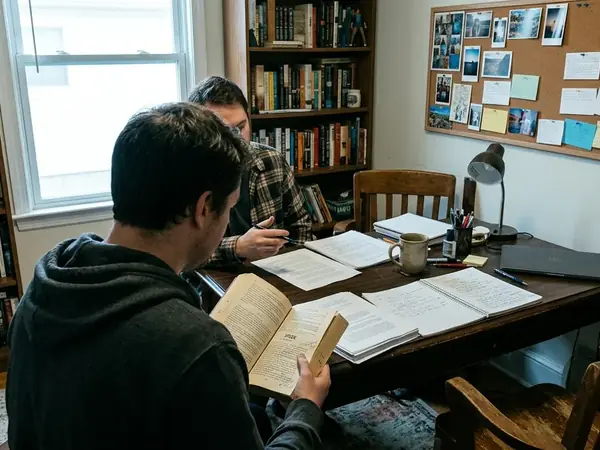
A common question from newer writers is blunt and honest: “If I can see a bad sentence, shouldn’t I fix it now?” Sometimes, yes. If the sentence blocks your next thought, fix it and move on. But if every awkward line becomes a doorway into a full copyedit, the draft never gets its structural hearing.
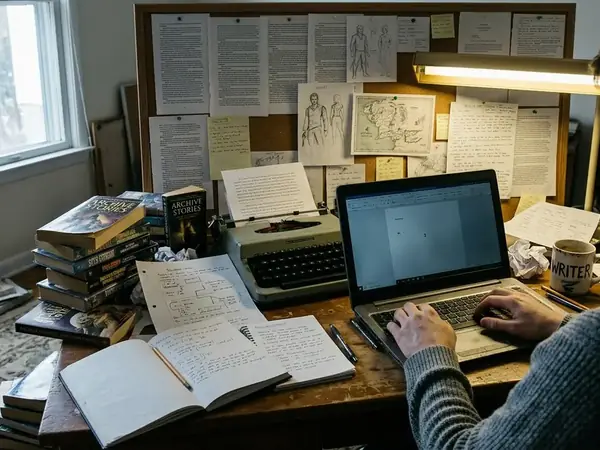
Merc Rustad’s earlier craft archive makes a useful distinction here. Drafting creates raw word count. Revising rearranges, rethinks, cuts, expands, and changes the existing story. Editing smooths the revised draft after the heavy decisions have been made.
I keep that distinction close because strange fiction punishes premature neatness. A beautiful paragraph can make a broken scene order feel more finished than it is. A polished image can hide the fact that the protagonist’s emotional turn happens twice. A lyrical ending can distract from the absence of consequence.
Label the pass before you begin
- Discovery pass: generate material and follow the draft’s appetite.
- Structural pass: move scenes, test causality, rebuild the ending.
- Voice pass: sharpen POV, diction, attention, and metaphor.
- Line-editing pass: polish rhythm, flow, clarity, and friction.
Caution: Do not correct every sentence until the story’s sequence, POV, ending, and emotional trajectory are stable. Elegant prose can become emotional glue; once it dries, writers resist moving the very scene that needs to move.
Make a Weirdness Inventory Before You Cut Anything
Start with the oddities that carry weight
Before cutting, make a small inventory of the draft’s load-bearing oddities. Not a glossary. Not a world bible. A field list.

For one story, that list might include ritual language around a dead sibling, a narrator who addresses a city as a lover, and impossible biology that changes under moonlight. For another, it might include uncanny imagery, nonstandard POV, invented social rules, queer or nonbinary embodiment, mythic logic, tonal dissonance, or a deliberately cold emotional register.
The useful question is not “Is this weird?” The useful question is “What job does this weirdness perform?”
Sort by function
- Decoration: texture that can be reduced without damaging the story’s engine.
- Plot engine: the odd rule or event that makes action possible.
- Character pressure: the strange condition that forces choice.
- Emotional signal: the image or ritual that carries grief, desire, shame, hunger, or awe.
- World logic: the rule that teaches the reader how this reality behaves.
Then make a do-not-normalize list. These are the details that must survive revision because they create the story’s identity. Give them flavor notes if that helps: brittle, cold, sharp, luminous, hungry, ceremonial, salt-stung.
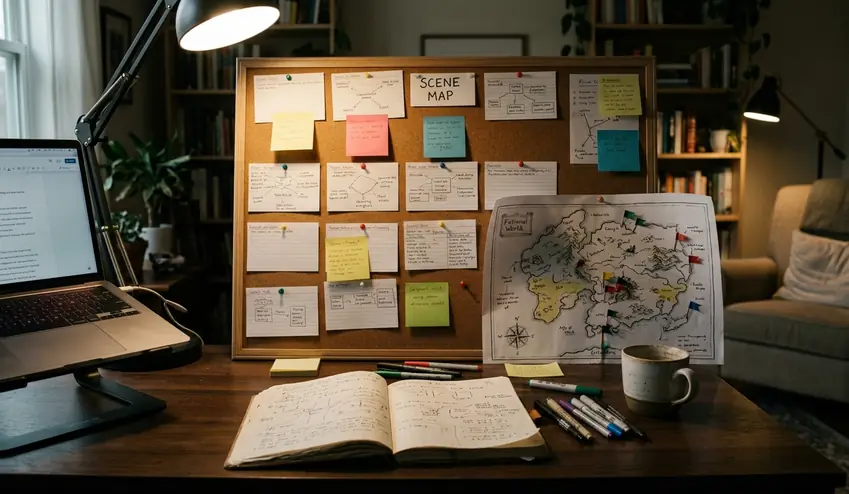
In a tiny flash piece, the inventory may be three phrases in the margin. In a longer short story, it may need a scene map because world logic, emotional causality, and POV distortion are braided together.
Diagnose Scenes by What Changes
The scene test
A scene is not a block of attractive prose. It is a unit where something changes enough to move the story along.
For every scene, ask: what is different at the end that was not true at the beginning? The change may involve knowledge, power, desire, danger, intimacy, self-understanding, obligation, or access. If nothing changes, the scene may be atmosphere wearing a scene’s coat.
Cut repetition, not texture
The best cuts often remove duplicated changes. If two scenes both teach the protagonist that the ghost-system demands payment, keep the one that alters the relationship, raises the danger, or reveals the sharper rule. Do not automatically cut the more unusual scene just because it asks more from the reader.
This is where workshop advice can go wrong. A group may suggest explaining the ghost-system, replacing the narrator’s ritual vocabulary with neutral exposition, and moving the ending earlier. The plot may become clearer, but the ceremonial dread can disappear. The better revision question is narrower: where does the reader need one more sentence of cause, desire, or consequence?
- Scene number
- Location
- POV
- Change
- Weird element
- Consequence
A simple scene map keeps the writer from mistaking density for progress. It also protects the strange material that actually does work.
Use POV and Voice as Preservation Tools
POV is more than camera placement
Merc’s earlier craft writing separates authorial voice, character voice, and story voice in a way that remains useful for revision. The distinction matters because weirdness often lives inside perception, not premise.
POV tells us what the narrator notices first. It tells us what they misname, what they avoid, what vocabulary they reach for under stress, and which metaphors belong only to them. Replace that filter with neutral exposition, and the draft may become clearer while losing its pulse.
A practical POV audit
- What does the narrator notice first in this scene?
- What do they misname, misunderstand, or translate incorrectly?
- What do they refuse to say directly?
- Which metaphors could only belong to this consciousness?
As a craft-context example from Merc’s novel-world materials, Bane can be discussed as an asexual and neuroatypical protagonist whose interiority should not be flattened into generic narration. The point is not to decorate the page with identity markers. The point is to let attention, avoidance, rhythm, and interpretation arise from the character’s lived logic.
Expert Tip: Take one paragraph and rewrite it in a deliberately generic voice. Then restore the character’s sensory and emotional logic. The difference will show you where the story’s voice actually resides.
Apply the 80/20 Test: Enough Familiar Ground, Enough Shiny
Use the ratio as a lens, not a leash
The 80/20 rule from Merc’s January 2016 craft discussion works best as an orientation check. Readers need enough familiar ground to follow the new material. That does not mean the story must become conventional.
The familiar portion may be grief, hunger, jealousy, ritual, workplace tension, debt, family obligation, or the desire to be touched without being understood. The shiny portion may be ghosts, sorcery, robots, impossible biology, a nonhuman social system, or a city that changes its streets in response to shame.
If confusion appears, first try adding one sentence of cause, desire, or consequence before deleting the strange element. Often the reader does not need less weirdness. The reader needs a handhold.
Apply it late enough to be fair
Do this after the weirdness inventory and the scene-change map, not before. Early balancing can domesticate the story before the writer knows what the story is protecting. A. Merc Rustad: author of strange, emotionally charged speculative work, gives us a useful craft lens here, but the lens should serve the draft rather than command it.
Revise on the Production Triangle: Quality, Time, and Energy
The humane revision plan is often the sharper one
Merc’s November 2013 writing-on-a-triangle essay frames quality, time, and energy or cost as forces always in negotiation. For short-story revision, that means the best plan is not the most punishing plan. It is the plan that improves the story without exhausting the writer into numbness.
Choose three revision priorities before starting. For a damaged speculative short, I often want ending, POV clarity, and scene order. Another draft might need emotional causality, world-rule clarity, and a quieter final image.
Three priorities are enough.
Know when a pass has gone stale
Stop a pass when it stops producing new information and starts producing competent sameness. That sameness feels reassuring, especially after a difficult structural pass, but it can blur the story’s edges. Merc’s later productivity and self-care writing around Habitica, spoons, dailies, and emotional labor sits near this point without turning revision into a productivity contest: energy is part of craft because attention is part of craft.
A story revised past the writer’s alertness may become smoother and less alive. Strange fiction needs judgment, not just stamina.
Only Then Line-Edit for Sound, Flow, and Friction
Polish after the architecture holds
Line-editing arrives last because sound and flow can only be judged honestly after the structure has settled. Once the ending belongs where it is, once the POV filter holds, once scenes change rather than merely shimmer, then the sentences deserve close work.
Read aloud if that helps. Use text-to-voice if fatigue, auditory processing, or sensory needs make human-read audio difficult. Merc’s February 2016 discussion of text-to-voice and line-editing treats tools such as NaturalReader as context-specific assistive practices, not requirements or badges of seriousness.
Listen for the wrong kind of smooth
- Repeated sentence rhythms that lull the scene flat.
- Over-explained images that explain away mystery.
- Softened verbs where the story needs pressure.
- Exposition that translates every ritual, ghost, body, or hunger into ordinary terms.
Line-editing should refine the strangeness, not apologize for it. A story can be clear and still feel dangerous in the hand.
Scope: Workshop Help Without Surrendering the Story
Where this method fits
This revision approach draws from several parts of Merc Rustad’s craft archive, with references spanning posts from 2012, 2013, 2016, and 2017. It fits short speculative fiction especially well when premise, voice, setting logic, and emotional causality are intertwined.
It also has limits. This framework can strengthen authorial choice, but it cannot guarantee publication, award attention, editorial acceptance, or a universal reader response. A story’s oddity still meets editors, sensitivity readers, workshop peers, trusted genre readers, and publication contexts with their own histories and thresholds.