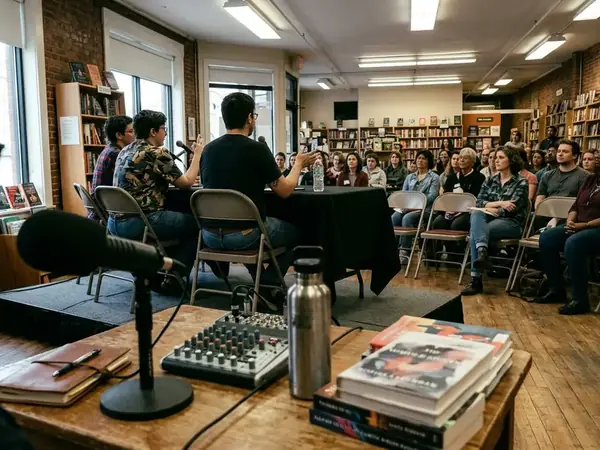
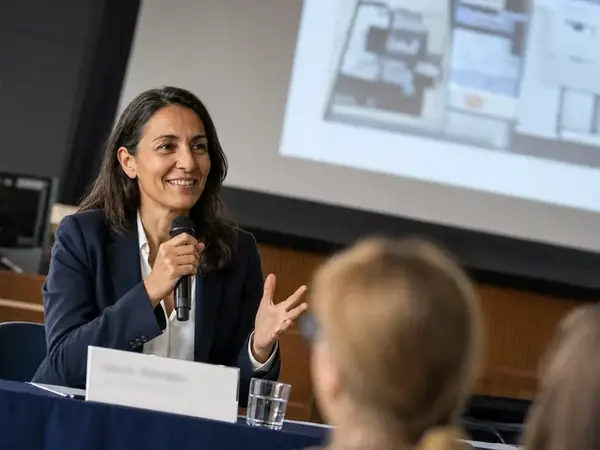
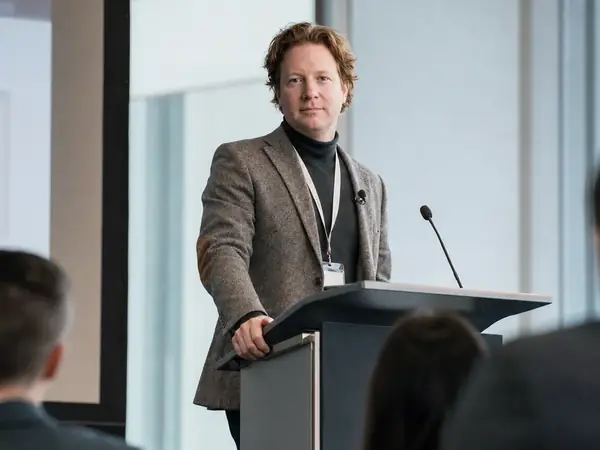
The first invitation to sit on a convention panel arrives with a strange mix of flattery and dread. Someone read your work, or your name reached a programming committee, and now you have a session title and a time slot. What happens between that email and the moment the microphone reaches you is preparation, and preparation is a sequence you can learn.
This guide walks through that sequence for a first SFF panel: reading the assignment hidden in the title, coordinating with a moderator, building notes you can stretch or compress, and surviving the audience Q&A with your dignity and your boundaries intact.
What Panel Preparation Involves: The Quick Version
Preparing for an SFF convention panel means four things: learning what the session is meant to accomplish, coordinating with the moderator, organizing a small set of adaptable ideas, and planning how to take part in a shared public conversation. That is the whole job. The rest is detail.
Treat preparation as a sequence rather than a performance you must nail. The sequence protects you when nerves arrive.
First SFF Panel Preparation Sequence
- Confirm the brief. Identify the session's subject, purpose, audience, format, spoiler boundaries, and expected expertise before you write a single note.
- Contact the moderator. Confirm attendance, name pronunciation, and how the session will run.
- Prepare three to five core ideas. Each gets a concise answer and one expandable example.
- Rehearse concise answers. Practice at least one at several lengths so you can fit any time window.
- Check logistics. Room or platform, timing method, access arrangements, water, notes.
- Plan for audience questions. Decide in advance how you will handle unclear, off-topic, or personal ones.
One caution before the mechanics: the convention's program email, participant policies, accessibility guidance, and staff instructions always take precedence over any general sequence, including this one. When the two disagree, follow the convention.
Read the Assignment Behind the Panel Title
A panel title is an assignment written in shorthand. Read the title first for its broad subject, then read the description slowly and mark four things: the subject, the implied question or tension, the intended audience, and the expected level of expertise.
Pay attention to the verbs. Words like discuss, examine, teach, interview, and read tell you what kind of session you are walking into. A description may wear a broad, inviting title while its actual format is a tightly moderated interview, a workshop, a reading, a roundtable, or a hybrid. Preparing generic discussion answers before you know which one can burn the hours you needed for real preparation.
So ask the format question early. It changes everything downstream.
While you read, do two more things. Mark any major plot detail that will need spoiler handling, and pick at least one spoiler-safe example you can use freely. Then list any unfamiliar terminology or factual claim you plan to reference and flag it for verification. Being selected for a panel does not require encyclopedic mastery or a settled position on every issue. It requires that the things you do say hold up.
Coordinate Early Without Writing the Whole Conversation
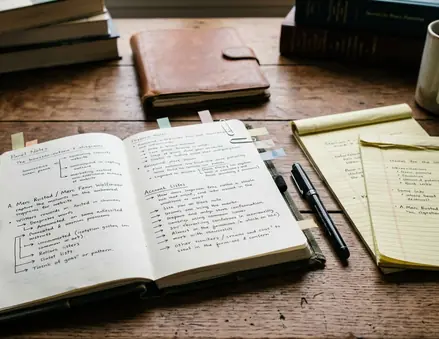
The first message to a moderator has one purpose: remove administrative uncertainty without generating new work for either of you. Keep it short. Introduce yourself, confirm you will attend, give the pronunciation of your name, name a few relevant areas of interest, and disclose any access needs privately.
Then ask about structure. A few questions worth their space:
- Will there be opening statements?
- Are questions circulated beforehand?
- How long is the session?
- Will there be audience Q&A?
- May we mention books or current projects?
Send a short biography and current publication details only if the moderator asks or if the event has not already collected them. Nobody needs the same paragraph three times.
If there is no moderator contact listed, a schedule conflict surfaces, an access issue stays unresolved, or some other administrative decision looms, write to programming staff directly. That is what they are there for.
Build Notes You Can Use at Three Different Depths
Here is the method that has saved more first-time panelists than any other: build each core idea in three layers. A one-sentence position. A brief example. A deeper explanation you deploy only if the moderator invites you to expand.
Prepare three to five of these core ideas rather than complete scripted answers to every question you can imagine. Scripts break the moment a conversation moves; layered ideas bend with it.
Structure each idea as claim, example, bridge. State the point. Ground it in a specific text or experience. Then connect it back to the panel's wider subject so your answer lands somewhere useful instead of trailing off.
Rehearse One Answer at Three Lengths
Take one likely answer and practice it at twenty seconds, at one minute, and at two minutes. The short version keeps a full room moving; the long version fills a lull when the moderator hands you the floor. Knowing both means you never have to guess how much runway you have.
Check Your References Before They Betray You
Verify titles, creator names, quotations, and publication details before the event. A polished factual example can fail in public the moment a misremembered author name or a wrong publication date slips out, and the correction lives in the room longer than the point did. Take Rustad's The Collars We Wear as an example you might cite: check the spelling, the venue, and any detail you plan to quote rather than trusting memory under stage lights.
Write spoiler-safe wording for each example that touches a major revelation. And mark, in advance, any boundary involving identity, health, trauma, finances, or publishing relationships, so you know your own edges before anyone tests them.
Speak Clearly While Making Room for the Other Panelists
A panel is a shared instrument. Relevance, responsiveness, and equitable airtime matter as much as any single insight you brought. Before you speak, run three quick questions: Is the point relevant? Does it respond to what was just said? Is there room for another voice?
Enter through a moderator's cue, a brief raised hand, steady eye contact, or a direct link to the previous speaker. Lead with your answer, then add context. That way the audience follows you even when time runs short and the moderator has to cut in.
When two of you start talking at once, finish one short sentence and yield cleanly: "Please go ahead; I can return to this if there is time." Avoid repeating a point already made unless you are adding a distinct example, a qualification, or a consequence. Keep project mentions tied to the question rather than turning every answer into a pitch.
One more thing worth stating plainly: a panelist may decline to represent an entire identity or community, and that boundary needs no public defense.
Handle Audience Questions, Silence, and Unknowns
The Q&A follows a rhythm. Listen through the complete question. Wait for the moderator to direct it. Find the narrowest useful interpretation and answer that one. Then stop before your response turns into a second lecture.
A long, winding question can be restated in neutral language before you answer, and an unclear one deserves a request for clarification rather than a guess. First-time panelists tend to answer too quickly, repeat a point, fill a pause that was doing useful work, or keep piling on context after the time signal. Slowing down fixes most of it.
Recovery Phrases Worth Memorizing
- Outside your expertise: "That is beyond what I can answer responsibly; I can speak only to…"
- Unwanted personal disclosure: "I don't discuss that part of my life publicly, but I can address the broader craft issue."
- A promotional question: name the relevant project briefly, then bridge: "The connection to today's topic is…"
Harassment, repeated interruption, and event-policy violations belong with the moderator or convention staff. Those are not yours to manage alone from your chair.
Use a Panel-Day Checklist That Protects Your Attention
Run the day chronologically so attention stays where it belongs. Complete registration, locate the room, check in with the moderator, confirm how your name is said and how you will be introduced, inspect seating and the microphone, then find both the moderator's timing signal and the nearest staff contact once you sit.
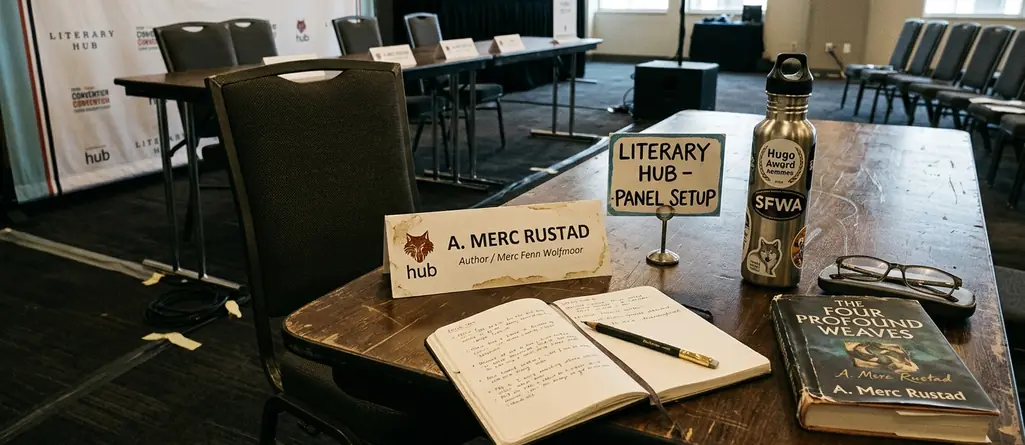
Bring compact notes, a pen, permitted water, any required medication, and event contact details. Arrive early enough to solve ordinary badge or navigation trouble, without treating any single arrival time as universal, because venues and convention instructions vary.
For the microphone: keep a consistent distance, speak toward it, resist the urge to tap it, and let staff make adjustments. If the session is virtual or hybrid, check headphones, charging, camera framing, your display name, muted notifications, and a backup contact method before anyone joins.
Turn the First Panel into a Repeatable Practice
When it ends, thank the moderator and your fellow panelists briefly, and note any promised link or correction while the wording and the recipient are still fresh. Resist the pull to stretch the session into unsolicited networking.
Later, run a private review under three headings only: what communicated clearly, where the answer lost focus, and what preparation would help next time. Then update your reusable panel file with corrected references, stronger examples, pronunciation notes, transition phrases that worked, and any organizer procedure worth remembering. The second panel is easier because the first one left you notes.
So before the next invitation lands: what is the one idea you want an attendee to still be holding as they walk out of the room?