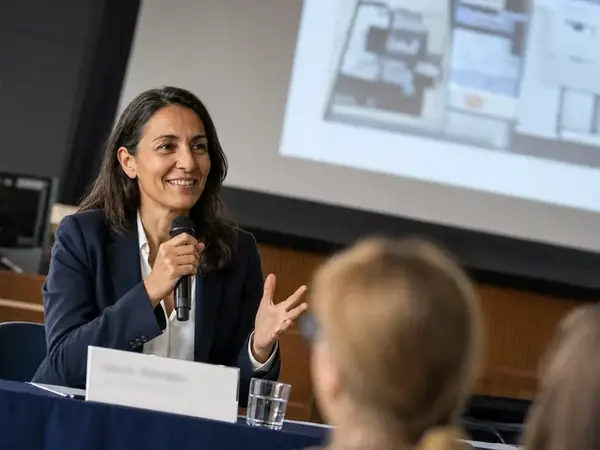
Incomplete, inconsistent, or difficult-to-download materials create immediate friction for podcast producers and convention organizers. Missing assets increase the chance of errors in introductions, program listings, and promotional materials. The media kit serves as an extension of the author's living archive, designed backward from the organizer’s immediate tasks. They need to introduce the author accurately, describe the featured work, place a usable image, prepare the conversation, and reach the correct contact.
Assembling the Essential Assets for Organizers
A functional press kit separates essential operational files from optional background material. The core package requires a preferred introduction, short and medium biographies, a verified publication sheet, portrait and landscape headshots, image credit and permission text, pronunciation guidance, a public contact route, and appearance requirements. Optional additions include adaptable question prompts, selected review excerpts with source details, teaching angles, an extended biography, and supplementary photographs.
A useful front page identifies the preferred biography and headshot immediately. Place direct links to these specific files within the first screen or page of the overview document. Organizers rely heavily on these front-page directives to bypass digging through extensive archives.
Structuring the Master Folder for Immediate Retrieval
The folder structure follows production use, prioritizing immediate retrieval over literary chronology. Top-level folders separate the distinct types of media required for an appearance.
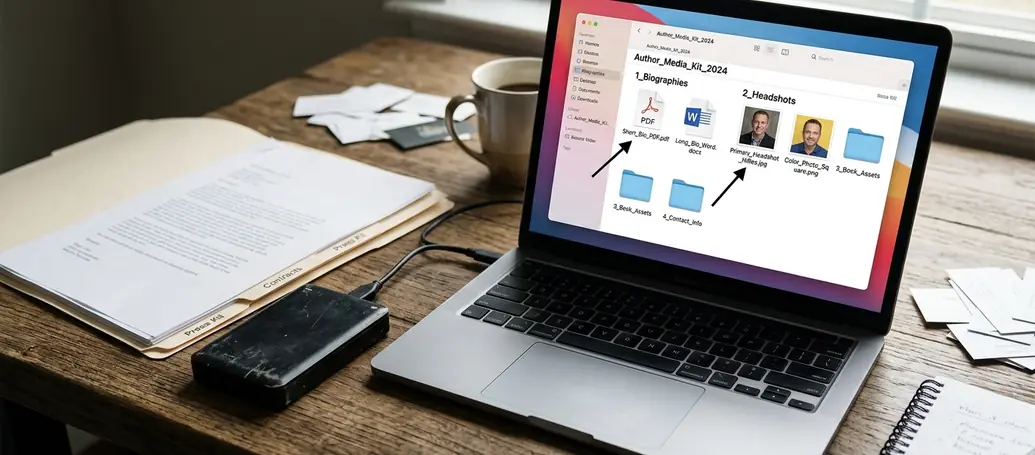
A practical hierarchy uses numbered prefixes to maintain order:
- 00-Overview
- 01-Biographies
- 02-Headshots
- 03-Books-and-Stories
- 04-Appearance-Briefs
- 05-Contact
Apply descriptive filenames that include the author name, asset type, orientation or biography length, and revision date. A file named MercFennWolfmoor_Bio_Short_2026-08-21 or MercFennWolfmoor_Headshot_Portrait_2026-08-21 tells the recipient exactly what they are opening. Provide a compact PDF overview alongside separate image and text files. Editable text is retained for program databases and show notes. The PDF preserves hierarchy, spelling, and the author’s intended presentation.
Structuring the Public and Private Divide
The public-kit/private-access seam requires careful management. Organizers receive actionable seating, platform, and microphone requirements in the downloadable packet. Medical history, travel records, identity documents, private telephone numbers, home addresses, and unrelated contracts remain entirely outside the public downloads. Public-facing access language describes the arrangement needed, such as step-free access or a chair with back support. Diagnoses and private medical records travel exclusively through a direct organizer contact.
Selecting Headshots That Withstand Aggressive Cropping
Photographs are chosen by checking recognizability first, followed by sharpness, crop tolerance, and documented reuse rights. Keep the original camera or photographer-supplied file. A small image copied from a social profile lacks the data required for a preservation master. The full-resolution source files remain in the private master folder, while delivery copies include portrait and landscape choices.
For print use, confirm that the image can supply roughly 300 pixels per inch at the intended printed dimensions. Changing the resolution label alone does not create detail. Leave visible space around the head and shoulders so the same portrait can tolerate square, vertical, and banner crops without cutting through the face.
Store a text file beside the images containing the photographer credit, rights holder, permitted promotional uses, a factual caption, and concise alt text describing the visible person and setting. Image reuse is governed by the actual license or photographer agreement. A standard kit cannot promise publication rights that the rights holder never granted. The introduction–crop–credit breakdown demands attention: one verified identity must survive spoken intros, program-image trimming, and photographer attribution without producing three conflicting versions.
A well-structured kit reduces friction, but it cannot guarantee that every convention volunteer will use the provided files. Organizers occasionally pull outdated images from search engines despite receiving a complete folder.
Drafting Modular Biographies and Verifying Speculative Fiction Credits
Biographies are assembled from one verified facts sheet. Lead each version with the current professional name and the work most relevant to the appearance. Each longer version adds context without changing the underlying claims.
Prepare an aloud-friendly introduction of approximately 50 to 75 words. Draft a web biography of 120 to 180 words for online schedules. Write an extended biography of 250 to 350 words for detailed program guides. A pronunciation entry can combine a plain-language respelling, stressed syllables, and an optional short audio file. Pronouns should appear only when the author wants them shared publicly.
Navigating Multiple Bylines
For authors publishing under multiple names, pair each name with its relevant works. Include a direct instruction for the host, such as: “For this appearance, introduce the author as Merc Fenn Wolfmoor.” Check that every filename and caption uses the intended current byline.
Publication and award language is checked against the original venue, publisher record, or announcement before it is copied into introductions. Each selected bibliography entry records the exact title, credited byline, publisher or venue, month and year of publication, and format such as novel, collection, anthology story, or magazine story. Award records use distinct terms for winner, finalist, nominee, recommended work, and eligible work. Those labels carry specific meanings in the speculative fiction community and are never interchangeable.
Adapting the Brief for Audio Hosts and Panel Moderators
The appearance packet is built by holding the verified biography and works sheet constant, then changing the operational page for the medium. A podcast page prioritizes pronunciation, recording preparation, spoiler limits, content boundaries, and conversation paths. For a convention, that same page carries moderator copy, panel scope, access arrangements, remote-platform needs, seating, and microphone details.
A podcast brief can offer four to six adaptable prompts grouped under themes such as speculative worldbuilding, short-fiction craft, queer and nonbinary voices in genre literature, multiple bylines, or the ethics of imagined technologies. Frame question prompts as possible routes into the work, leaving the host or moderator in editorial control. Avoid scripting praise or requiring hosts to use canned questions.
Recording preparation identifies whether the author needs a browser link or installed application, headphones, a local backup recording, video framing, and files to read at least three to seven days beforehand. Featured-work summaries identify the subgenre, central premise, intended readership, and a spoiler boundary such as “discussion may cover the opening third only.”
The convention brief identifies the preferred introduction, panel subjects, topics requiring advance notice, remote participation needs, the signing name, and any limit on what can be signed.
Auditing the Package Before the Final Send
Quality control starts with a recipient-style pass. The sender opens the delivered package on a second device, follows every link, extracts any archive, and locates the introduction, pronunciation guide, featured-work summary, and preferred image from filenames alone. Run the final file and link check two to five business days before sending the packet. Repeat the contact and logistics check within 24 hours of a live appearance if arrangements have changed.
Check exact title punctuation, credited byline, pronouns, award wording, photographer credit, spoiler limits, and whether the listed contact reaches the person handling the appearance. Trigger an immediate revision after a new publication, byline change, confirmed award result, replacement headshot, new public pronouns, or changed access requirement.
Use an ISO-style revision date such as 2026-09-11 inside the overview document as well as in filenames. Keep older versions in an archive clearly marked as superseded. Once a photograph has been reduced to a small thumbnail and its detail discarded, enlarging that thumbnail can interpolate pixels but cannot restore the original image data.