A Nomination’s Lasting Value Is an Open Door to the Story
A nomination’s most useful legacy is a story that remains easy to find and read. That is the editorial position behind this tracking method: recognition should leave a usable path to an authorized edition.
Keep Discovery Traceable
Separate attention from reading. Record award milestones. Distinguish rights inquiries from signed agreements. Preserve an accessible reading route.
When I follow an old finalist listing, I want to reach the fiction while the title still holds my attention. Readers can lose that thread at ordinary points: an unfamiliar publication byline, an expired reading link, or a bibliography entry pointing to an unavailable edition. Start by checking that handoff.
A finalist announcement creates an opportunity for discovery. It guarantees neither readership growth nor later publication. The award listing establishes recognition; the authorized story page, edition, or recording supplies the reading route. Keep both in view.
No verified story-level analytics or finalist timelines accompany this article; the method below organizes evidence rather than reporting measured increases.
Record the Story’s Reading Routes Before the Announcement
What belongs in the starting record? Enough information to identify the publication precisely and describe what a reader can actually open.
- Identity: title and publication byline, transcribed from the publication.
- Publication: original venue and publication date.
- Editions: available web, print, ebook, and audio formats.
- Access: free reading, subscription, purchase, or restricted temporary access.
- Destination: the URL or bibliographic location of each authorized reading copy.
For an author published under multiple names, preserve the byline attached to that appearance. An entry under A. Merc Rustad should retain that publication name even where a current bibliography uses Merc Fenn Wolfmoor. The reader needs to match the award entry to the right work without guessing.
Keep the author’s bibliography and the publisher-hosted story page as separate destinations. Knowing who visits the bibliography supplies no readership figure for the publisher’s edition.
Choose a pre-announcement comparison window that the available records can support. Explain its boundaries and note earlier reprints, audio editions, newsletter mentions, and other promotion. Preserve the lengths of unequal intervals rather than treating their raw totals as equivalent. There is no supported universal duration to prescribe here.
Track the Announcement, Ballot Period, and Ceremony Separately
Begin with a dated chronology. A plain-text log is enough; consistent fields matter more than elaborate software. As the record develops, add evidence retrieval dates and coverage intervals so another reader can reconstruct the comparison.
- Finalist announcement: record the actual announcement date and supporting source, then identify the edition readers could access at that moment.
- Applicable voting period: record opening and closing dates, eligibility restrictions, and any stated temporary reading arrangements.
- Ceremony: record its date, current story availability, and concurrent promotion.
- Subsequent discovery: give later recommendations or links their own entries, even after the formal award calendar ends.
For every entry, retain these fields: event date, event description, supporting source, story availability, concurrent promotion, observation source, metric retrieval date, and metric coverage interval. Mark unavailable fields plainly.
A report retrieved after the ceremony may describe activity during the announcement period. Those dates serve different purposes. Keeping them separate prevents a later download of a report from becoming a false date for the activity itself.
Award arrangements differ. Finalist status alone establishes neither a public ballot nor a voter packet. Where temporary access exists, record its stated dates and whether it serves the public or eligible readers.

The timeline keeps award events beside access conditions and observation records, making gaps visible without filling them with assumptions.
A Story-Page Visit Is Not a Completed Read
Classify the signal before interpreting its significance. A page opening and a reader’s sustained attention occupy different evidentiary ground.
- Page visits indicate access activity. Preserve the platform’s distinctions among views, sessions, and users.
- Outbound clicks indicate a choice of reading route. They establish neither successful loading at the destination nor reading there.
- Downloads indicate acquisition of a file or edition.
- Listening metrics describe audio engagement according to the platform’s own definitions.
None of these signals alone proves attentive completion. Definitions also differ between platforms, so retain their terminology rather than renaming everything “readers.”
Keep Measures Separate
Maintain separate records for venue analytics, author-site analytics, and reader correspondence. Mark inaccessible publisher analytics as unavailable.
Repeat visits may belong to one person; that same person may also download an ebook and listen to audio. Adding those activities produces an unstable readership total. A message saying someone read the story belongs in a correspondence record: valuable testimony, with no claim to represent everyone who encountered it.
Follow Reprint and Audio Interest Through to Publication
A rights inquiry opens a conversation. A released edition gives readers another route to the story. Preserve the intervening stages rather than compressing them into a single success marker.
- Editorial inquiry: record the date and scope of the initial interest.
- Specific offer: retain the proposed terms in the private working record.
- Executed agreement: record when the parties complete the agreement.
- Production: date documented production updates.
- Public release: identify the edition and its actual availability.
For a proposed reprint, record venue, format, language, territory, and known rights restrictions where appropriate. Keep confidential correspondence and contractual terms out of the public account. The tracking record organizes status; the actual agreement governs permissions and obligations.
Ask what “audio” means in the proposal. Narration of the prose and a dramatized adaptation can involve different permissions and production scope. Adapted dialogue, performers, or dramatic treatment deserve an explicit description.
Retain earlier audio and later reprint dates without assigning either to award recognition unless documentation supports that connection. Chronological proximity alone leaves the cause unresolved.
Turn the Timeline into a Credible Story of Discovery
How should the account read once the records are assembled? Build each passage around a documented event, an observed signal, a plausible explanation, and a competing explanation.
Two Nearby Announcements
Hypothetical example: a finalist announcement and a newsletter mention appear close together. Author-page visits subsequently increase. Both events offer plausible explanations; their proximity prevents confident assignment of the increase to either source alone.
If publisher-side reading records remain unavailable, say so. Increased attention to the author page, unknown reading activity at the publisher, and no documented rights development can coexist. That is a useful account of mixed outcomes.
Place evidence beside the claim it supports: publication records for title and byline, an official dated announcement for finalist status, and a permissioned platform record for the activity it actually measures. Public prose can remain lean while the underlying log carries the detail.
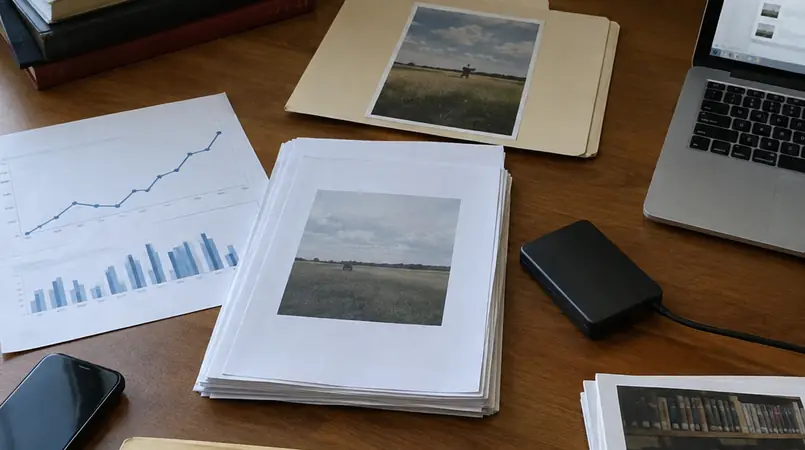
Separate evidence tracks help preserve the boundary between recognition, access activity, reported reading, and publication.
Keep the Reading Route Open After the Ceremony
Return to the route itself. Open the authorized destination and confirm that the story or edition is identifiable. A working link can still lead to a page where the fiction is unavailable.
- Retain the correct publication byline and original publication entry.
- Identify a later authorized reprint as a separate edition.
- Check web, print, ebook, and audio availability individually.
- Replace expired award-season wording with a public availability note bearing the actual verification date and current access conditions.
A hypothetical closing scene: after the ceremony, a reader at a kitchen table finds the story in an old finalist listing. The author’s current bibliography preserves the matching byline and points to an authorized edition. The reader follows it, sets a mug beside the keyboard, and opens the story.