Key Takeaways: The MERC vs. BOOK Revision Map
Main Point: MERC names the writer’s intentions, habits, protectiveness, and instincts. BOOK names the manuscript’s visible structure, promises, gaps, and needs. Revision gets cleaner when those two voices stop pretending to be the same voice.
I use this map when a speculative draft has become too intimate to judge plainly. The writer remembers the scene that took three exhausted nights. The book only knows whether that scene earns its place.
The process has five passes: cool-down read, macro note-taking, structural reorganization, speculative continuity audit, and scene-level polish. It is not a universal rulebook. It is a working author process for long-form speculative fiction, where plot pressure, invented systems, and reader trust often depend on one another.
- Set the draft aside for 3 to 30 days, depending on deadline pressure.
- Read in a format that discourages tinkering.
- Mark BOOK evidence before proposing MERC solutions.
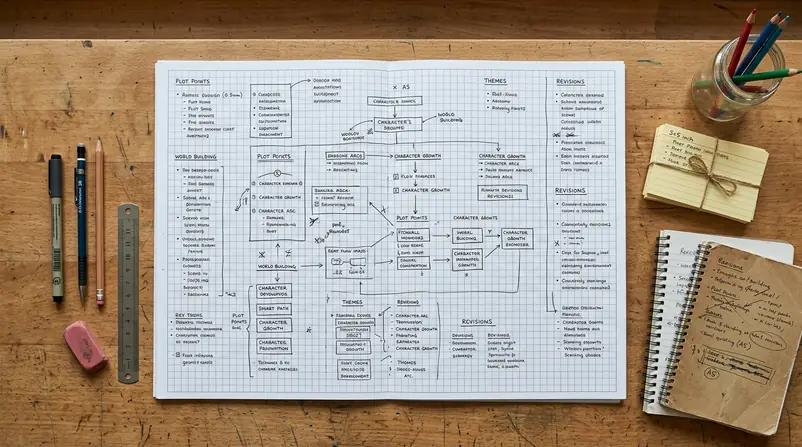
- Sort notes into promise, payoff, confusion, pacing drag, character motivation, world rule, repeated image, missing bridge, timeline question, and terminology inconsistency.
- Reorganize chapters before polishing sentences.
- Verify speculative systems before judging scene language.
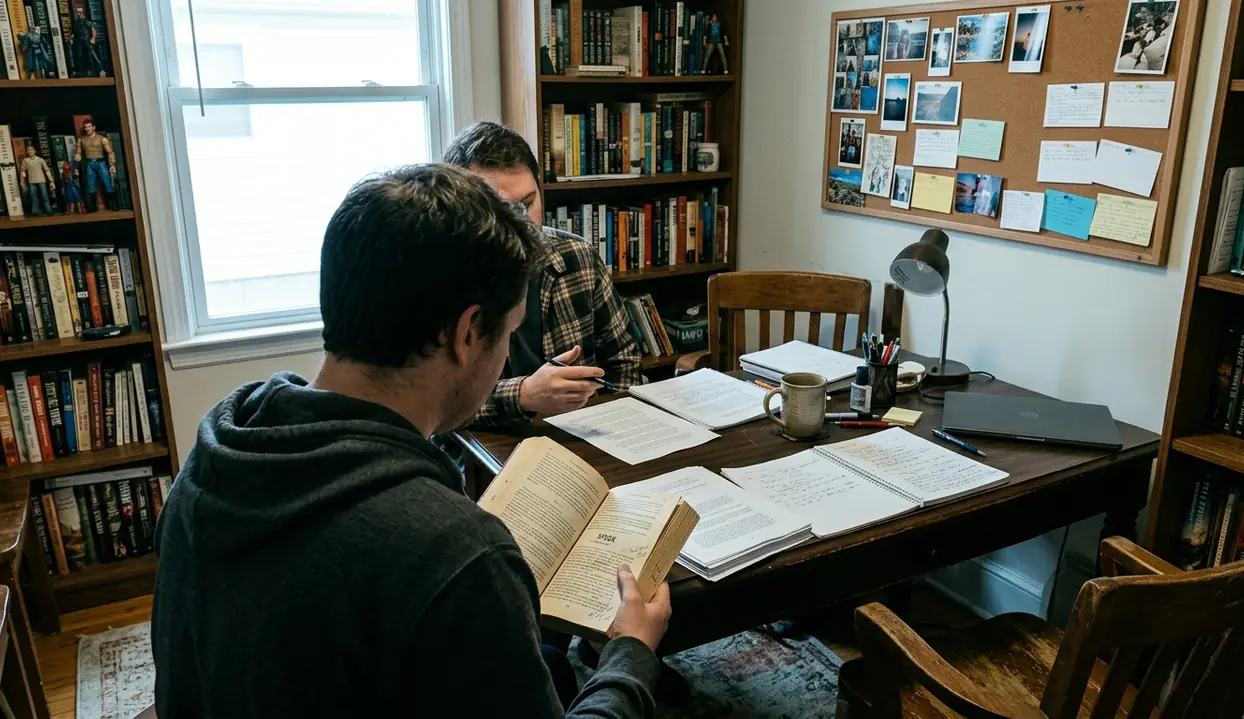
Think of MERC as the author leaning over the table with hopes, fears, muscle memory, and taste. Think of BOOK as the draft under the lamp, indifferent but honest.
Why Separate the Writer From the Book?
The emotional reason
On one difficult manuscript, the most useful note was not about plot. It was the sentence, this chapter matters to the writer more than it matters to the book. That distinction saved the chapter from sentimental defense and also saved the writer from shame.
Most authors protect something. A voice they fought for. A monster with teeth. A political structure they researched for months. In speculative fiction, the attachment can feel especially justified because the world itself may have demanded private labor before it ever reached the page.
The diagnostic reason
The split works because authorial intent and manuscript evidence answer different questions. MERC asks: What did I mean to write? What am I protecting? Which cut am I avoiding? Which scene feels essential because of effort rather than function?
BOOK asks colder questions: What has the draft established? What promise has it made? What is missing on the page? Where does the reader have to infer a rule the story has not taught?
A speculative novel rarely carries one system at a time. It carries plot, worldbuilding, magic or technology, character arcs, invented terminology, thematic payoff, and reader expectation. Treating all of that as a single problem leads to muddled edits. Separating MERC from BOOK turns revision into a conversation, not a courtroom.
Pass One: Read for Shape Before Fixing Sentences
The beginner mistake
The first temptation is always language. A weak verb. A flat exchange. A paragraph that sags.
Leave it alone.
In the first pass, change the context of the manuscript so your hand cannot reflexively repair the page. Print it. Export it. Put it on a tablet. Lock a duplicate draft. The format matters less than the friction it creates.
The progression path
Use the first read to observe shape. Mark questions in the margin or in a separate note file, then defer solutions until the full read is complete. A deadline draft may get only 3 to 7 days of cooling distance. When the calendar allows, 14 to 30 days gives the book more room to become strange again.
Tag macro notes by category:
- Promise: What does the chapter invite the reader to expect?
- Payoff: Which earlier pressure resolves, mutates, or deepens?
- Confusion: Where does the reader lack necessary information?
- Pacing drag: Where does pressure slacken without benefit?
- Character motivation: Where does desire blur?
- World rule: Which invented condition governs the scene?
- Repeated image: Which motif returns, and does it evolve?
- Missing bridge: Where does the draft jump over cause and effect?
- Timeline question: Where does sequence become unstable?
- Terminology inconsistency: Where does invented language shift without purpose?
The advanced tip
Speculative fiction needs special attention to causal clarity. If the reader misunderstands a rule, a technology, a prophecy, or a social structure, later scenes may fail for reasons unrelated to prose quality. A beautifully polished chapter can still fail if the draft taught the reader one magic rule in chapter three and quietly violates it in chapter seventeen without cost, exception, or character awareness.
Pass Two: Turn Notes Into a Scrivener Revision Dashboard
The common question
Do I need Scrivener for this?
No. The practice is organization, not software loyalty. Scrivener happens to make the work visible because folders, labels, metadata, and document notes can sit close to the manuscript. For feature details, consult the official Scrivener user guide.
The working setup
Create four containers: current draft, cut material, revision notes, and continuity references. Preserve the current draft before moving chapters. Archive cut material without treating the archive as a promise that every passage will return.
Then give each chapter a status. Keep. Rewrite. Move. Cut. Verify. Expand. These labels should not become decoration. They should tell you what kind of attention the chapter needs next.

A useful chapter task has six parts:
- Chapter identifier.
- Problem type.
- BOOK evidence.
- MERC concern.
- Chosen action.
- Continuity dependency.
That format prevents one giant revision document from becoming a swamp. Instead of fix middle act, the task becomes: chapter twelve, pacing drag, second council scene repeats the same objection as chapter ten, MERC concern is attachment to the ceremonial language, chosen action is merge with later betrayal scene, dependency is revised rank terminology.
Related consideration
A spreadsheet can do this. So can index cards, ordinary folders, a plain text outline, or a physical binder. The essential move is chapter-level decision-making.
Pass Three: Audit the Speculative Engine
System repair, not ornament repair
This is the pass where many drafts reveal their true problem. The plot looks broken because the invented system is underdefined. Or the character arc looks thin because the world never charges the character a real cost for power, access, knowledge, or refusal.
Speculative worldbuilding should do narrative work. A term, law, ritual, device, map boundary, or nonhuman perception earns its space when it changes choices, consequences, danger, knowledge, or social pressure. Otherwise it may be beautiful wallpaper.
Audit areas
- Magic rules.
- Technology limits.
- Invented vocabulary.
- Political structures.
- Cultural practices.
- Timelines.
- Geography.
- Nonhuman perspectives.
- Prophecy logic.
- Cost and consequence.

For each load-bearing element, trace first appearance, later use, stated exception, cost paid, character who knows the rule, and character who misunderstands it. This is where a novel with multiple invented societies may need a separate continuity file for names, rank, geography, taboos, and rule exceptions.
Caution: Clarify the reader’s path without explaining away mystery, wonder, dread, or mythic uncertainty. A strange world should not become a technical manual unless the book itself wants that form.
A. Merc Rustad, author of work such as The Collars We Wear, often gives readers estrangement with emotional pressure close behind it. In a publication venue like Fireside, where compression and immediacy matter, the speculative premise cannot simply decorate the page. The invented pressure has to touch the body, the choice, the wound.
Pass Four: Revise Scenes From Function to Language
Start with what the scene does
A scene earns polish only after the writer knows its job. Purpose first. Conflict second. Emotional turn third. Continuity fourth. Prose last.
This order can feel severe, especially when the best sentence in the chapter is also the sentence hiding the chapter’s weakness. Still, the hierarchy protects the draft from cosmetic revision.
Scene diagnostic
Ask the same questions every time:
- Who wants what?
- What changes?
- What new information enters?
- What promise is paid off or renewed?
- What pressure carries into the next scene?
If the answers blur, revise function before sound. Compress exposition. Move a reveal earlier. Clarify a rule. Strengthen a character’s choice. Merge two low-pressure scenes. Split an overloaded scene. Resequence a payoff.
A scene that the writer loves because it contains a favorite image may still need cutting if BOOK shows that it repeats an emotional beat, delays a necessary choice, and creates no new pressure. That does not make the image false. It only means the image may belong in the archive, not in this draft.
Expert Tip: When a scene resists cutting, write a one-sentence function claim for it. If the claim depends on mood alone, test whether that mood already appears in a stronger scene.
Scope and Limitations: When This Process Should Change
Best fit
This process works best for completed or nearly completed long-form speculative fiction drafts. It assumes the manuscript has enough architecture to examine: beginnings that make promises, middles that complicate them, endings that expose whether the book paid its debts.
It is an authorial craft framework for revision, not a promise of publication, representation, award consideration, or editorial acceptance.
When to alter the sequence
A short story may combine the macro read, continuity pass, and scene pass into a single sitting. A co-written book may need agreement on authority before structural reorganization begins. Heavily researched historical fantasy may require source verification earlier than scene repair. Deadline-driven editorial revision may force line work and structural work to travel together, even when that is untidy.
Exploratory first drafting is different again. Early drafts sometimes need permission to wander before they need evidence tables. Challenge the method when the manuscript’s state demands it.
The underlying practice remains the same: organize evidence, distinguish desire from structure, and make decisions at the level where the problem actually lives.
Final Revision Checklist Before the Next Draft
Before opening the next draft file, run the book through a final gate. Do not ask whether every sentence is lovely yet. Ask whether the architecture can bear the polish you are about to spend on it.
- Macro notes sorted.
- Structural changes chosen.
- Speculative rules verified.
- Character arcs tracked.
- Cut material archived.
- Scene tasks assigned.
- Line edits delayed until the book’s architecture is stable.
The work is not to silence MERC. The writer’s intention, instinct, and protectiveness belong in revision. They bring taste, memory, and nerve.
But the final decisions need evidence. Let MERC ask the questions, but let BOOK supply the evidence.