Why These Audio Adaptations Deserve a Listen
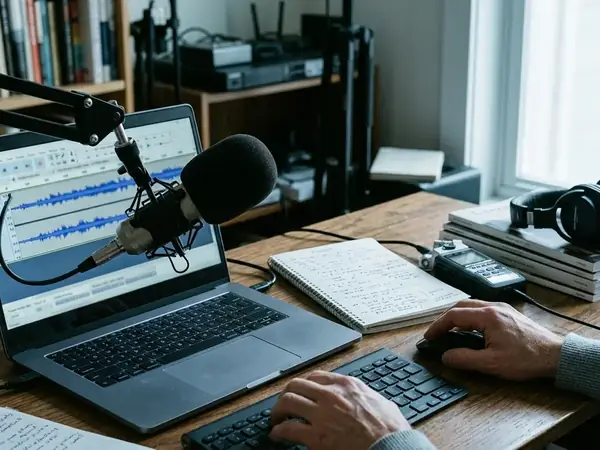
Headphones on. Playback started. A familiar speculative world waits for the narrator’s first breath.
The strongest audio adaptations reveal something that silent reading leaves implicit. A voice can expose guarded affection inside a clipped exchange. A pause can turn an elegant sentence into a threat. Music, ambience, and production clarity can give scale to a setting, though a direct voice-only reading may carry equal force when the prose supplies its own weather.
This selective guide covers fiction credited to A. Merc Rustad or Merc Fenn Wolfmoor. Those names need to remain attached to their specific publication records rather than being treated as interchangeable labels. Each finished entry should offer a spoiler-light premise, confirmed credits, performance notes, and reliable listening information.
That last word matters: confirmed. The available research material describes the verification method but supplies no episode pages, narrator credits, or matched bibliography records. Publishing a polished five-title lineup from secondary memory would risk assigning a narrator to the wrong edition or presenting a reprint as an original audio publication.
The Credit Lock
A recording enters the roundup only after its title, publication-specific byline, narrator, original venue, publication status, and production type agree across the official bibliography and the audio publisher’s episode credit.
Five Stories to Hear Anew
Readers commonly ask why a recognizable title cannot simply be added and corrected later. Audio credits answer that question. One story may exist as a voice-only reading, a lightly scored narration, and a later full production; each version represents different performers and editorial choices. Even a familiar work such as The Collars We Wear should not acquire an audio history by assumption.
The five records below therefore remain deliberately unfilled. They show the exact publication threshold an editor must satisfy. This is a narrow limitation of the source packet: it contains the assessment framework, but none of the canonical episode records needed to name the recordings.
-
1. ‘Awaiting Verified Story Title’ — Official Audio Publisher Pending
Begin with the premise as the official description presents it, removing revelations that belong to the story’s turn. Match the title and the A. Merc Rustad or Merc Fenn Wolfmoor byline against the official bibliography before recording the original venue or publication status. Copy the narrator’s name from the episode credit, keeping producer and composer in separate fields. Then listen to the opening minutes for the performer’s first clear choice about character, tension, or scale. Classify the recording only after hearing it: full audio production, lightly scored narration, or voice-only reading. Consider whether ambience supports the sentences and whether speech remains intelligible. Recommend the episode to a specific kind of listener, based on the performance-story fit rather than reputation. Listen for: the first moment the voice narrows the story’s emotional possibilities.
-
2. ‘Awaiting Verified Story Title’ — Official Audio Publisher Pending
For the second record, establish whether the episode presents an original audio publication or a later adaptation. That distinction affects how the original venue should be described and prevents a reprint from quietly becoming an apparent debut. Preserve the exact author name printed in the official credit. Record the narrator, producer, composer, and accessibility information separately instead of compressing them into a vague production attribution. During playback, follow the narrator’s handling of dialogue: distinct voices should remain legible without sliding into caricature. Listen beneath the speech for music or environmental sound, then decide whether those elements enlarge the setting or crowd the prose. The recommendation should identify readers drawn to that particular balance of voice and atmosphere. Listen for: a pause that changes the apparent intention behind a line.
-
3. ‘Awaiting Verified Story Title’ — Official Audio Publisher Pending
This entry should test performance against the story’s central consciousness. Speculative fiction often asks a voice actor to inhabit an unfamiliar body, distributed intelligence, altered memory, or unstable point of view. Describe that premise lightly, without converting its mystery into a synopsis. Confirm the publication context through the bibliography and episode record, then copy the credited narrator exactly. Assess where vocal weight makes a mood or character inference more explicit than it appears on the page. Production remains a separate question: restrained sound may leave useful room around an uncanny voice, while denser scoring may establish physical scale. State what can actually be heard and credited. Recommend the recording to listeners who enjoy interpretive tension rather than those seeking a definitive explanation. Listen for: the delivery of the first sentence whose speaker remains productively uncertain.
-
4. ‘Awaiting Verified Story Title’ — Official Audio Publisher Pending
The fourth record should concentrate on pacing. Confirm title, byline, venue, narrator, and publication status first. Then compare the prose’s sentence rhythm with the performer’s breathing and pauses. A narrator can make a compact paragraph feel breathless, ceremonial, intimate, or withheld without changing a word. Mark the strongest instance and explain its effect without revealing the outcome of the scene. Next, identify the sonic treatment from the recording itself. Music-free narration still qualifies for this guide, but it should never be called dramatized or sound-designed unless audible elements and official credits support that description. Check speech clarity on ordinary speakers as well as headphones. Recommend the episode to listeners who value cadence, syntactic texture, and close vocal control. Listen for: where silence creates a boundary between thought and action.
-
5. ‘Awaiting Verified Story Title’ — Official Audio Publisher Pending
The final record should ask how well the production survives outside ideal listening conditions. Verify the bibliographic and episode fields first; availability on a canonical publisher page forms part of the inclusion test. Listen once through headphones for low ambience, spatial cues, and small shifts in vocal distance. Replay a short passage on ordinary speakers and check whether the words remain clear when those subtleties recede. Describe the premise and original context only where both official records support them. The performance assessment should explain how delivery shapes identity, intimacy, or estrangement, while allowing ambiguity to remain active. Finish with a precise listener recommendation tied to the story’s formal demands. Listen for: one production element that disappears on speakers and whether the sentence still carries its intended pressure.
What to Notice When Fiction Moves into Sound
A narrator offers one possible reading of a story. Treating that performance as the final explanation closes down the ambiguity that much speculative fiction works hard to preserve, especially around identity and unfamiliar consciousness.
A useful comparison tracks three choices. First, identify an emotion or character inference supplied by the voice. Second, notice a pause that changes the speed or force of a sentence. Third, isolate one production element that supports or competes with the prose. These small observations produce better criticism than broad claims that the audio version feels “more immersive.”
Two-Speaker Test
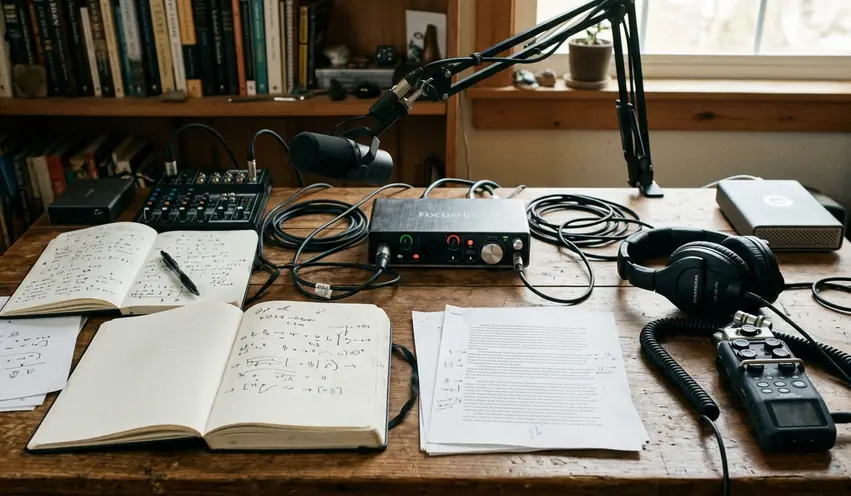
Use headphones to catch subtle ambience. Then replay a short passage on ordinary speakers. The atmosphere may thin out, but dialogue and narration should remain clear.
Read the credit block with the same care. Narration, production, composition, and accessibility work involve different contributions. Keeping those fields separate makes praise more accurate and helps listeners find the people responsible for a choice they admired.
Try the First Cleared Story on Page and in Audio
Once the first record passes the credit lock, use this four-step comparison without reading reviews or commentary beforehand.
- Inspect the official record. Copy only the exact story title, credited author name, narrator, publisher, and spoiler-free description. Leave producer and composer in their own fields.
- Listen without multitasking. Retain three moments: the first clear characterization choice, the strongest use of silence or sound, and one line whose meaning changes through delivery.
- Open an authorized text. Find the marked line and read the surrounding paragraph silently. Compare the sentence’s punctuation with the narrator’s pauses, stress, and pace.
- Write three lines. Complete one judgment about the voice, one about the soundscape, and one about which format should come first for a new reader.
Here is the finished note structure to copy: “The voice clarified the character’s guarded response by stressing the final phrase. The soundscape withheld music during the exchange, allowing the pause before the reply to carry the tension. I would choose the text for a first encounter because the sentence remains more ambiguous on the page, then use the recording to test that ambiguity against a committed human voice.”